Your first cosmetic conversation
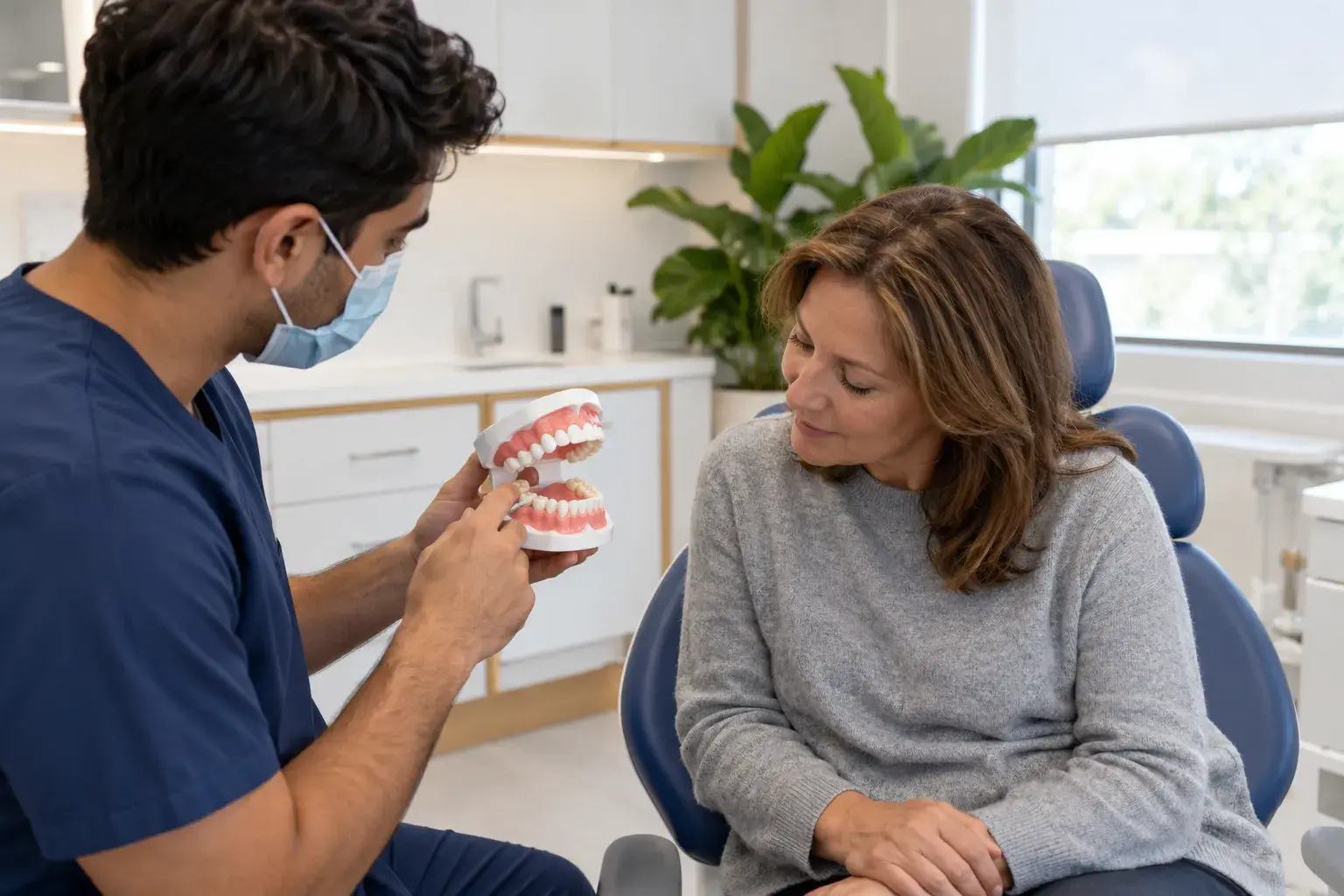
Most people who ask about cosmetic dentistry have had something on their mind for a while: a chipped front tooth, a dark filling, teeth that have yellowed or a gap. We start by asking what bothers you, when you notice it and what you would like to be different.
We also ask practical questions, such as how much upkeep you are happy with and whether you would prefer something that can be undone. If dental visits make you anxious, we are happy to simply talk at this appointment and leave the examination until you feel ready. There is nothing to sign and no expectation that you book treatment. Plenty of people leave with a few ideas to think about, and that is a completely reasonable outcome.
Healthy teeth and gums come first
Cosmetic work sits on top of your natural teeth and gums, so it can only be as reliable as what is underneath. Before recommending anything, your dentist checks for decay, gum inflammation, worn or leaking fillings and signs of grinding, and takes x‑rays where they would help.
If we find a problem, we usually suggest treating it first. Bonding a veneer over an untreated cavity, or whitening teeth with inflamed gums, tends to cause trouble later. Sometimes a scale and clean alone removes enough surface staining that people decide they don’t need anything further.
Ready to book a visit?
Matching the concern to the treatment
There is rarely only one way to approach a cosmetic concern. As a rough guide, these are the options people most often discuss with us, starting with the most conservative. These are starting points rather than rules, and your dentist may suggest a combination, such as whitening first and then matching a new filling or crown to the lighter shade.
- Teeth that have darkened or yellowed: professional whitening
- A small chip, gap or uneven edge: tooth-coloured composite bonding
- Old dark or silver fillings: replacement with tooth-coloured fillings, inlays or onlays
- Several front teeth with uneven shape, size or stubborn discolouration: porcelain veneers
- A heavily filled, cracked or root-filled tooth: a crown
- A missing tooth: a bridge, a dental implant or a partial denture
Weighing whitening, bonding, veneers and crowns
Whitening lightens your own enamel without removing any of it, but it only affects natural teeth and the result fades over time. Composite bonding adds tooth-coloured material to the surface, often with little or no drilling. It is usually completed in a single appointment and is easy to touch up, although it can stain and chip more readily than porcelain.
Porcelain veneers cover the front of a tooth and resist staining well, but fitting them generally means shaving a little enamel from the front of each tooth. Crowns cover the whole tooth and need more preparation, so they are generally kept for teeth that are already weakened rather than used for appearance alone. Inlays and onlays sit between a filling and a crown, replacing lost structure while keeping more of the healthy tooth. Your dentist will explain how the cost, lifespan and maintenance of each compare for your teeth.
Reversible and irreversible choices
It helps to think about each option in terms of what it takes away. Whitening and most bonding leave the tooth largely as it was, so you can change your mind later. Veneers and crowns involve shaping the tooth, and once enamel is removed it does not grow back, so that tooth will need a covering for the rest of your life.
That commitment matters more the younger you are, because veneers and crowns are likely to be replaced several times over the decades. For this reason we often suggest a step‑by‑step approach: try the simplest option first, live with the result for a while, and only then decide whether you want to go further.
When we may suggest waiting or a different path
Part of our job is telling you when a treatment isn’t a good fit. We may recommend holding off, or not going ahead at all, in situations like these. If we suggest waiting, we explain why and what would need to change first, and you are always welcome to seek a second opinion.
- Decay or gum disease that needs treating first
- Heavy grinding or clenching that could damage new work
- Teenagers whose teeth and gums are still developing
- Pregnancy or breastfeeding, in the case of whitening
- Crowding that orthodontic treatment may address with less tooth removal
- Expectations that a treatment is unlikely to meet
Costs and cover for cosmetic work
The cost of cosmetic treatment depends on how many teeth are involved, the material chosen, whether a dental laboratory makes the restoration and whether any health treatment is needed first. It is also worth allowing for future upkeep, such as touch‑up whitening gel or eventually replacing a veneer.
Health fund cover for cosmetic treatment varies a great deal. Whitening is often not covered at all, while veneers and crowns fall under major dental item numbers that some policies limit or exclude when the purpose is cosmetic. Checking your item numbers with your fund before you decide avoids surprises.
Cosmetic dentistry, step by step
Questions about cosmetic dentistry
What counts as cosmetic dentistry?
Broadly, any treatment where the main aim is to change how teeth look, such as whitening, bonding or veneers. Some treatments, like crowns or tooth-coloured fillings, are done for health reasons but also affect appearance, so the line is not always clear‑cut.
Is bonding or a veneer the better choice for a chipped front tooth?
For a small chip, composite bonding is often the more conservative choice because little or no enamel needs to be removed. A porcelain veneer may be worth considering if the chip is larger or the tooth is also discoloured. Your dentist will explain the trade-offs for your particular tooth.
Can cosmetic treatment straighten crooked teeth?
Veneers or bonding can sometimes disguise mild unevenness, but they do not move teeth. Where teeth are noticeably crowded or out of line, orthodontic treatment may be a more conservative option, and we can refer you to a registered specialist in orthodontics.
Is there an age limit for cosmetic treatment?
There is no upper limit, provided your teeth and gums are healthy. For younger people we are more cautious: whitening is generally not recommended under 18, and irreversible treatments such as veneers are usually delayed until the teeth and gums have finished developing.
Will cosmetic dental work need redoing later?
Usually, at some stage. Whitening fades, bonding may need polishing or repair, and veneers and crowns can eventually need replacing. Factoring in this long-term upkeep is an important part of deciding.
What if I am not sure what I want?
That is very common. Come in for a conversation and we can talk through what is possible, starting with the simplest options. You don’t need to have a plan in mind before you book.